
Serena Hotel’s Impressive Nairobi Skyline
This week I’m staying in the Nairobi Serena Hotel, an oasis of luxury in the lush tropical gardens of Nairobi’s Central Park, and my hotel room has breath-taking views of Nairobi’s skyline – an African success story writ in glass and steel.
But don’t just take my word for it. Talk a video gander at my hotel room view for yourself:
Now don’t you want to be in the Serena Hotel yourself right now? Swimming in the pool on a warm summer day, with that skyline peeking past the attentive staff? I know I do…
Read MoreAfrican Shopkeeper Zen

Proud of his shop!
How can you make an African shopkeeper happy? How can you also make him legal, and hopefully move him or her from the informal to the formal economy of his country? In Kenya you can do this quickly and easily by building a kiosk.
For years under the Moi administration, small shops operated in every unimproved stretch of street that had decent foot traffic. Over time, these shops created their own traffic, their own economies of scale that, on occasion, the government would take exception to.
Then the shops would be razed, destroying livelihoods, commerce, dreams of the very poor African shopkeeper, the very people who were working the hardest to escape poverty. This cycle kept the illegal squatters from improving their shops too much, creating the very eyesores that brought the government bulldozers.
As part of the whole new Nairobi, the city council is changing its ways. It is now building strong, permanent shops for shopkeepers, replacing tin with metal, scrap wood with concrete, dreams with reality.
Read MoreA Whole New Nairobi

Building a new Nairobi
In the 1990’s, Kenya’s capitol developed a reputation as a center of thievery and lawlessness. People would be harassed by glue-sniffing street kids, their cars robbed of anything valuable, and any respectable citizen fled the city at sunset. That’s why they called it “Nai-robbery.”
When I was here in January 2003, President Mwai Kibaki had just been elected, ending twenty-seven years of rule by Daniel arap Moi, rule that became exponentially more corrupt over time. Kibaki’s arrival was greeted by two weeks of parties, the country rejoicing over the change, with optimism so high it frothed over in the streets of Nairobi.
For the first time in decades the zebra crossings were re-painted and cars stopped for pedestrians. Traffic police were refused bribes with drivers requesting a real ticket instead. The whole country seemed to cleanse itself overnight. At the time, I was impressed, but I didn’t think it would last.
I am on 60 Minutes this Sunday!
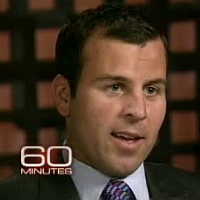
Look Ma, I’m on TV!
Are you in the USA? Do you have access to the American infotainment juggernaut? Then turn your attention to the CBS News program “60 Minutes” this Sunday, May 20th at 7pm.
Famed reporter Lesley Stahl will be covering MIT Professor Nicholas Negroponte’s progress with One Laptop Per Child, his dream of one-to-one computing as an educational boost, a way for children in the developing world to “learn learning”. Ms. Stahl will have on-location reports from OLPC testing in Brazil. With 13 million viewers on average, the coverage of OLPC should be a major boost in profile for the project.
Lesley Stahl will also be interviewing an obsessive follower of OLPC XO advances, a technology in development expert who publishes the informative and influential OLPC News, Wayan Vota.
Read MoreFrankfurt U-Bahn Musical Shopping
There is nothing quite like the experience of a European layover transition between a sweaty developing country and home sweet home America. Usually appearing as some odd dream at a painfully early hour, the Euro-jolt serves as a buffer, a reentry to Western civilization.
This trip, Frankfurt was my transition and with three hours before my next jet-leg, I fought jetlag with a trip to Frankfurt’s Römerberg central square. Being a transit foamer, I looked forward to checking out Frankfurt’s U-Bahn.
As a combined system of full metro and typical German Stadtbahn, the U-Bahn has an eclectic mix of passengers to augment its hybrid design. On my commute this morning was the airline stewardess, a logical companion from the airport, and this man, a Renaissance accordionist:
.
Read More